
Building blocks from waste
Price €135 (booking fee and lunch included)
- Location: Antwerp
- The full day is booked as one ticket
- Earth session 4 h, food waste session 3 h
- Minimum 6, maximum 15 participants per session
- Language: earth session in English, food waste session in English/Dutch
One day workshop exploring building material production from what is usually neglected or considered waste: one part focusses on earth and fibre based materials and the other on food waste. Two half days, booked together as one full day.
Earth session
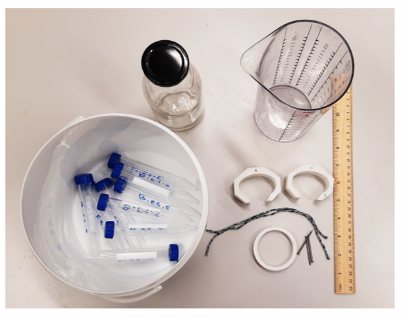
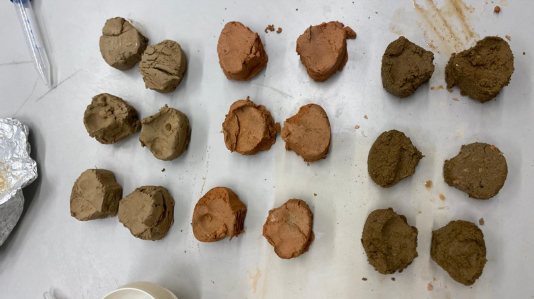
Can excavated soil, often considered waste, become a valuable building material? In this hands-on workshop, participants explore the potential of different excavated soils for producing earth-based building blocks. Through simple tests, they discover how to identify soil characteristics and assess their suitability for construction.
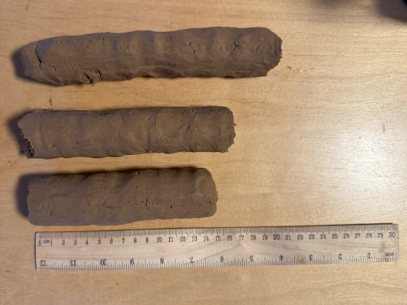
This first analysis is followed by a short practical lecture showing how changes in earth composition affect the material's final properties. Based on their observations and the lecture, participants develop their own material formulations and produce a small adobe or rammed-earth block.
No prior knowledge is required. Participants leave with their own tiny, formulated earth block and a better understanding of how local waste materials can become construction resources. The earth session lasts 4 hours, with a maximum of 15 participants.
Turning food waste into new products
This hands-on workshop explores how coffee grounds can be transformed into biobased materials. Participants learn about the use of circular materials and the composition and production of biobased boards, and experiment with different recipes, pressing techniques and finishes. No prior experience is necessary, and each participant takes home a sample of their own creation.
In their search for more sustainable alternatives to conventional materials, the construction and design sectors are paying increasing attention to biobased materials. Using renewable resources and waste streams, they offer opportunities to reduce environmental impact and close material cycles. This workshop introduces participants to the principles of biobased materials and demonstrates how organic waste can be transformed into valuable new products.
The session begins with a general introduction to the use of circular materials and the role that biobased materials can play in creating a more resource-efficient future. Various existing examples of biobased products are presented, with a particular focus on the valorisation of food waste.
Participants gain insight into the typical production process of biobased materials, from collecting and preparing raw materials to mixing, binding, pressing and finishing. The workshop also examines the general composition of these materials and explains how ingredients such as organic fibres, binders and additives influence a product's final properties.
In the practical part, participants experiment with different recipes using coffee grounds as the primary ingredient. By adjusting the proportions of the ingredients, they observe the effect of material composition on characteristics such as strength, texture, density and appearance. Different pressing techniques and finishing methods are also tested, so that results can be compared and the relationship between process and performance better understood.
No prior knowledge or experience is required. The workshop is designed for anyone interested in sustainability, circular design, material innovation or hands-on creation. The food waste session lasts 3 hours, with a maximum of 15 participants.
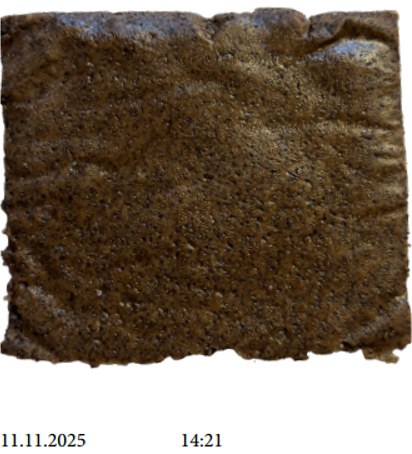
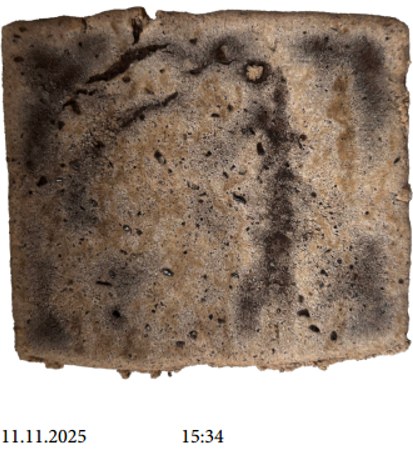
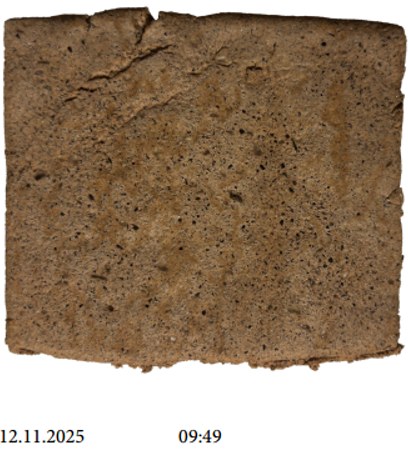
Coffee-ground boards: © Giulia van den Bremer.
← All events