The Role of Entrepreneurship in Implementing Circular Innovations
Price €60 (booking fee and lunch included)
- Location: Delft
- Duration: full day
- Minimum 10, maximum 25 participants
- Language: English
This interactive one-day workshop brings together up to 25 built-environment professionals. Participants will explore how entrepreneurial thinking can turn circular ideas into market-ready solutions that create environmental, economic, and societal value.
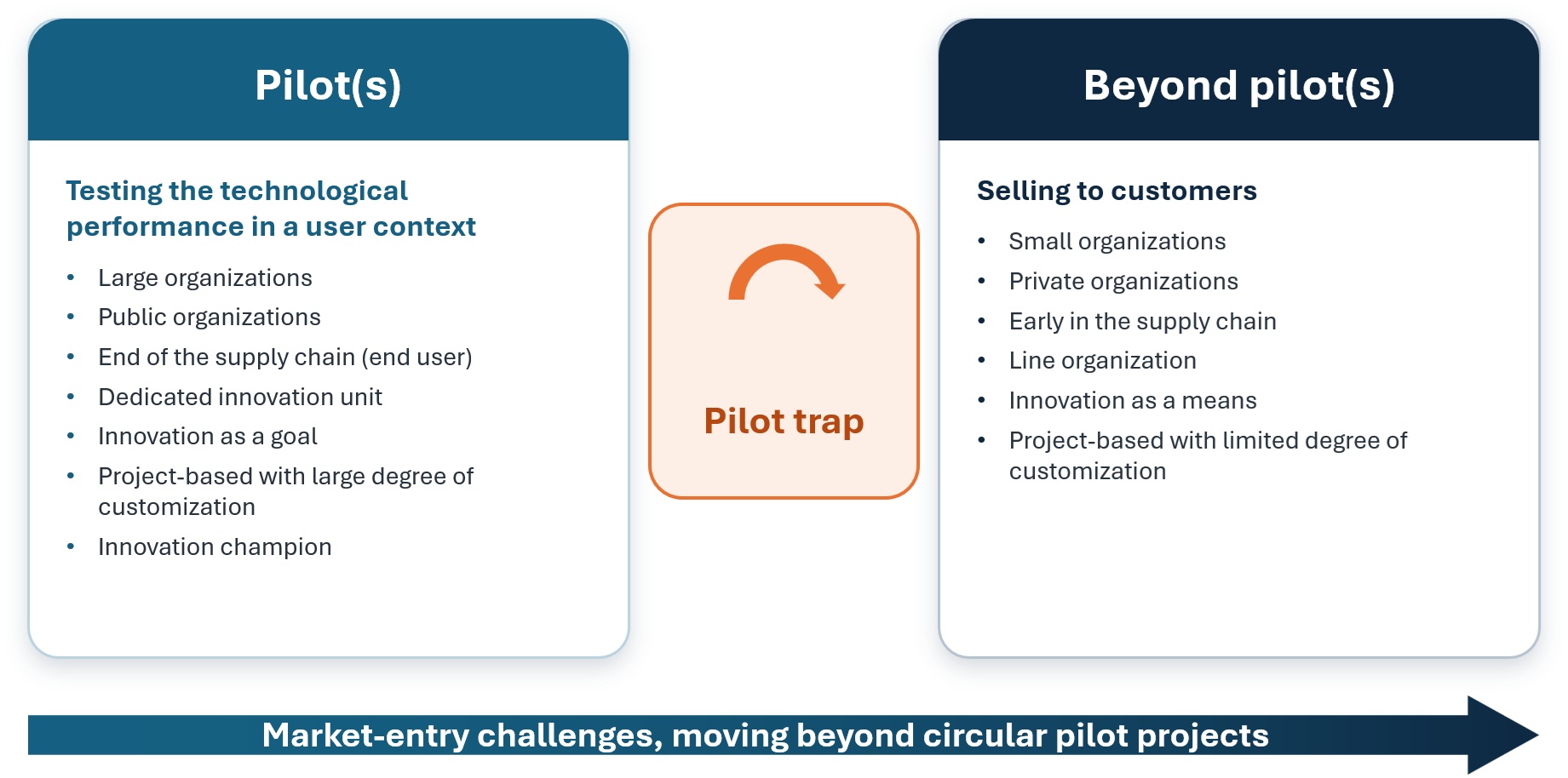
Through some introductory lectures, discussing case studies and participants’ experiences, participants will examine what makes circular products and services commercially viable. The workshop will focus on recurring market-entry challenges. These include the “pilot trap” in which promising innovations remain confined to repeated trials rather than becoming routine practice, and the “innovation valley of death”.
Two circular startups will share candid stories about developing and commercialising built-environment solutions. Their experiences will illustrate how ventures secure first customers, demonstrate value, finance growth, and adapt to established procurement and supply chains. The discussion will also show how cooperation across the value chain can help an innovation move beyond isolated demonstrations towards broader adoption.
In small groups, participants will apply these insights to a practical circular-construction challenge. For example, they may develop a route for taking a reusable building component from a successful pilot to repeat orders. They will consider the evidence, business model, partnerships, and incentives needed to reduce risk and create a credible path to market, while learning from different perspectives across the value chain.
By the end of the day, participants will better understand circular entrepreneurship and how to develop viable business models. They will leave with practical ways to overcome barriers to market adoption, assess the next step for an innovation, and identify opportunities for cross-sector collaboration.